
How to Find Who Owns a LaPorte County Property
Beacon lets you query by address, owner name, parcel ID, or alternate ID. Open the parcel card and note the owner field. Note its displayed upload date too. Then check Tapestry for the newest matching deed. Comparing both displays gives a far more reliable answer than either one alone.
- Search the address in Beacon and capture both parcel identifiers.
- Confirm the grantee on the latest matching deed in Tapestry.
- For an entity, check its exact name and status in Indiana's business search without treating an agent as the owner.
- Use the roll mailing address only for a lawful property-related contact.
When a LaPorte County Property Owner Is an Entity
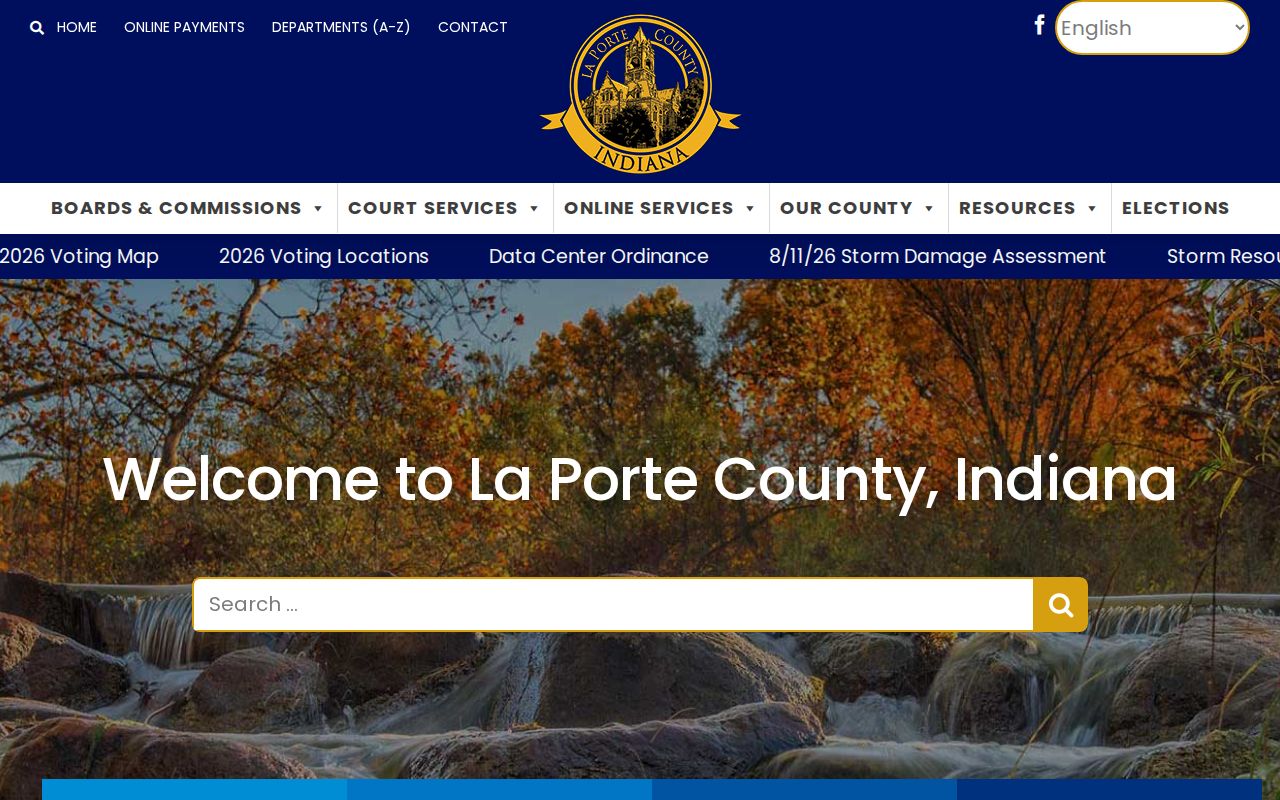
The county department hub capture below is the official route back to the custodians.
When the parcel owner is a company, trust, or estate, treat every name as a clue. The deed says otherwise. The Recorder's deed record remains the proof of who holds title. Entity names open another door. Search the exact business name in Indiana's public business registry. It covers business name, ID, filing number, registered agent, governing person, status, address, city, and ZIP. Remember that a registered agent's address is only a service contact. It does not make the agent the parcel owner. For trusts and estates, rely on the deed's named grantee. Rely also on any fiduciary capacity stated there. Probate records may explain a representative's authority. A will or death record alone never changes the land record.
Recent Deeds Can Outrun the LaPorte County Roll
Beacon's own samples display a created date and a last-uploaded timestamp, but the county publishes no promised update interval. So a freshly recorded deed can surface in the Recorder index while the assessment card still lists the prior owner. That is a source conflict, not a mystery. Record the grantee and recording date from the deed. Record the Beacon owner display and upload date too. If the gap matters, ask the Recorder or Assessor to clarify.
LaPorte County Estate Ownership Needs Two Records
Probate ownership calls for two records, and both matter. Search MyCase for the public probate docket. You can also ask the Clerk for it. Use the decedent's, estate's, or representative's name. Then hunt the Recorder index for an executor deed. It may be a personal-representative deed, survivorship deed, beneficiary deed, or other court-authorized conveyance. Parts of a probate case can be confidential. The court's order may not even be the final recorded deed. Always match the legal description to the parcel before naming the property owner.
Where LaPorte County Owner Information Comes From
Different offices answer different pieces of the ownership question. The Assessor's roll names the owner of record for tax administration. The Recorder's deed index supplies grantor, grantee, instrument type, and the recording event itself. GIS places the parcel on a map. None of these alone proves title.
| Source | Owner Info It Gives | Access |
|---|---|---|
| Assessor roll | Owner display, mailing address, parcel keys | Beacon public portal |
| Recorder index | Grantee on the latest recorded conveyance | Tapestry, Laredo, office |
| Secretary of State | Entity name, status and registered agent | Indiana public business search |
| GIS sources | Mapped parcel and jurisdiction | County Hub and state layer |
Keep ownership and occupancy separate. An owner may live out of state, hold title through a trust or company, or route the tax bill to a third address. None of that shows who actually occupies the site. When a deed and the roll disagree, report both dates and ask the Recorder or Assessor rather than quietly picking a favorite.
GIS Locates a LaPorte County Owner Search
Location comes first. The county Hub and the statewide parcel viewer confirm that your address and polygon sit in the expected township, municipality, and tax county. Neither tool replaces Beacon's ownership display or the Recorder's deed records.
Recorded Deeds Supply the Ownership Event
The deed supplies the ownership event itself. Read the grantee, grantor, instrument type, recorded date, and legal description closely. Tax mailing addresses, registered agents, court parties, and permit applicants all offer hints. None of them substitutes for the title record.
LaPorte County Owner Names Need Exact Matching
Exact matching makes or breaks a LaPorte County owner search. Compare initials, suffixes, trust wording, and entity designators character by character. The parcel number and legal description must tie the roll entry to the deed.
What "Who Owns This Property" Cannot Tell You
Some limits are built in. Indiana's Address Confidentiality Program and other sealing or redaction rules can restrict address disclosure. A roll name proves neither occupancy, beneficial ownership behind a trust, nor clear title. The county publishes no numeric deed-to-roll lag. So a recent transfer always warrants a same-day check with the Recorder.
Lawful use. Use an owner lookup for purchase diligence, boundaries, estate work, or civic review. Never use public information to harass, intimidate, or harm anyone.